In short: a passive salesperson becomes a growth engine when you stop managing presence and start managing performance. Cross-reference entry data with till sales and measure a personal conversion rate for each employee, train the team to offer a complementary product and handle objections through morning simulations, and reward improvement against their own average rather than a blanket bonus. An employee who can see their own numbers stops waiting for the shift to end and starts chasing targets.
The biggest mistake owners make is thinking the salesperson's job is "to help the customer find what they're looking for". If that were true, you could replace them with a signpost.
In today's world an effective salesperson is one who creates a sale that would not have happened without them. They don't only close a deal; they grow it.
For that to happen you have to stop managing presence and start managing performance.
The managerial problem
The managerial mistake is managing on impressions.
You look at an employee and think "they seem hard-working, they're always tidying the shelves" — and at the end of the day they may be your weakest seller. Without individual numbers for each salesperson you fall into the flattery trap: the employee who is pleasant to you gets the credit, while the quiet, effective one stays invisible. Without measurement an employee has no reason to improve, because as far as they can tell nobody notices whether they tried.
The modern management answer
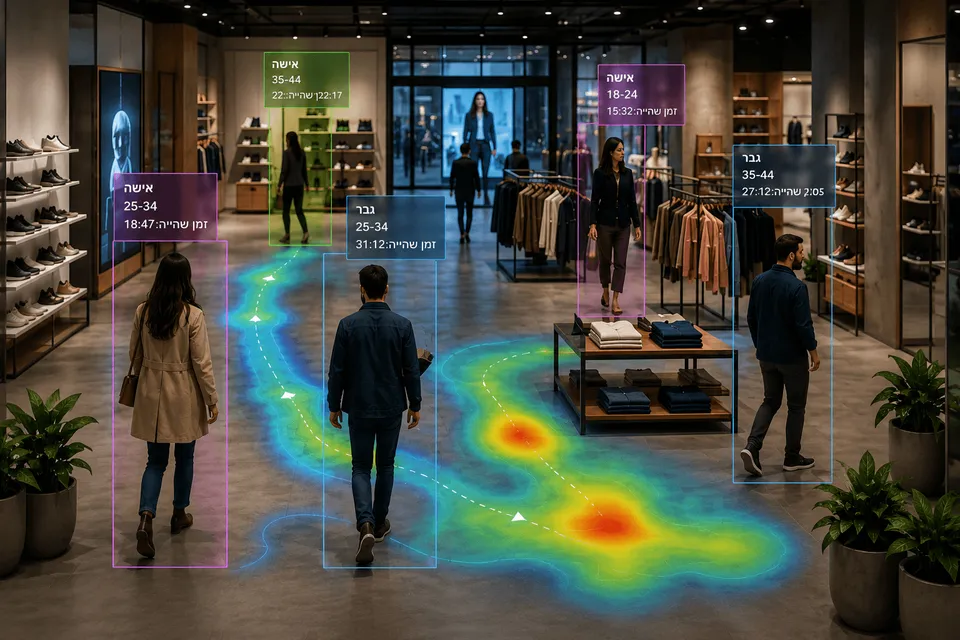
Turning selling into a game of numbers. Modern management harnesses data from the till and from Eyezapp to create full transparency.
The point is that every employee knows, at any moment, what their result on the board is.
When the data follows an employee around, they understand that selling isn't luck — it is technique.
A smart manager doesn't say "sell more". They say "your conversion rate is 15%, let's work out how to get it to 20%".
💡 Putting it into practice: sharpening the team and lifting sales
Define a personal effectiveness metric
Don't look only at total sales — one employee may simply have had a busier shift.
The action — cross-reference entry data (Eyezapp) with till sales during that employee's shift.
- The metric — personal conversion rate.
If employee A had 100 customers and sold to 20, and employee B had 50 and sold to 15, employee B is your real asset — even if their takings were lower that day.
The complementary-product method
The simplest selling method isn't looking for new customers but growing the ones already in the store.
- The technique — train staff on "why these go together". Customer bought a shirt? The salesperson should offer matching trousers or socks.
- The check — look at average items per transaction at the till. An employee with a high average is one who initiates a sale rather than simply handing goods over.
Training on objection handling
The customer says "that's expensive" or "I'm just looking". That is where the real selling starts.
- The action — give 15 minutes of the morning briefing to a simulation. Let staff practise on a difficult customer.
- The trick — give them psychological tools. Instead of arguing with the customer, teach them to say "I understand it looks expensive, but let me show you why this quality will save you money in the long run."
Performance-based reward
Don't hand out a blanket bonus to the whole branch — that rewards mediocrity.
- The method — create incentives against specific targets.
For example: a bonus for raising conversion 5% above their own average from the previous month.
- The result — the employee isn't competing with others, they are competing with themselves.
That creates a culture of achievement where everyone wants to improve in order to earn more.
💡 When an employee feels they are in a professional contest and knows exactly what is expected of them, they stop waiting for the shift to end and start chasing targets.