In short: reading a customer and closing the sale starts with accepting that selling is an emotional process: the customer buys a solution and a feeling, not a product. Instead of asking "can I help?" and getting "no thanks", open with an observation that starts a conversation, work out within seconds whether you are facing a decisive, a hesitant or an investigative buyer, and match your language to them. When you meet "that's expensive", don't cut the price — ask "expensive compared with what?" and show the value.
Selling isn't a logical process — it is an emotional one.
A customer doesn't buy a product; they buy a solution to a problem, or a good feeling.
The difference between an average salesperson and an outstanding one is the ability to read the customer's emotional map before they have opened their mouth. If your staff are waiting for the customer to tell them what they want, you are missing 50% of the branch's potential.
The managerial problem
The managerial mistake is the fixed-script approach.
Plenty of managers teach salespeople to say "can I help you?" the moment a customer walks in. The problem is that the customer's automatic reply is "no thanks, I'm just looking".
When you let your people talk like robots, they get robotic responses.
In that situation the salesperson feels rejected, the customer feels pressured, and the sale is dead before it began.
The modern management answer
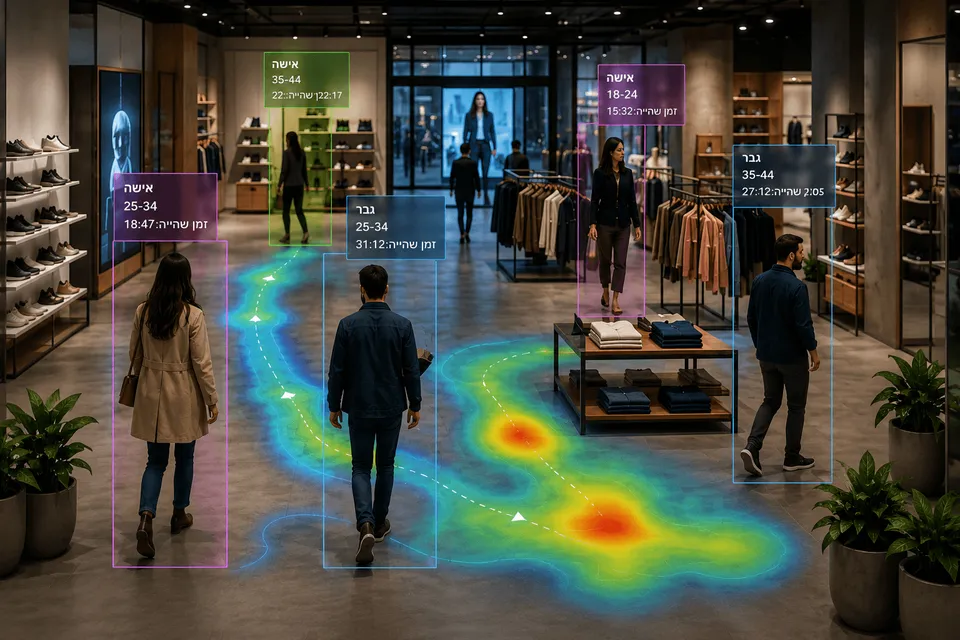
Using floor intelligence and reverse psychology. Modern management teaches staff to use real-time data to approach people intelligently.
The aim is to create a connection before anyone talks about price.
A smart manager teaches the team that you don't sell to someone who doesn't trust you. The information you have — that this customer has been walking around for ten minutes — tells the salesperson how to enter their space without crowding them.
💡 Putting it into practice: turning your salespeople into psychologists
Breaking the "just looking" reflex
Train staff to stop asking yes/no questions.
The method — instead of "can I help?", use an observation: "I see you're looking at our summer range — did you notice how well this fabric breathes?"
The result — the customer can't answer "no thanks". You have started a professional conversation instead of an interrogation.
Identifying the customer type
Teach your people to sort customers into three types within 30 seconds:
- The decisive one — knows what they want, in a hurry. The answer: fast, efficient service with no unnecessary talk.
- The hesitant one — needs social proof, asks a lot of questions. The answer: show them the best sellers, give them confidence.
- The investigator — checks quality, compares prices. The answer: give them the technical detail, show the added value.
When a salesperson identifies the type, they adapt their language to it — and that is the key to closing.
The "third option" technique
How do you grow a sale without sounding pushy?
- The method — when a customer is torn between two products, the salesperson should offer a third: more expensive, or higher quality.
- The psychology — it suddenly makes the original product look better value, or lifts the customer's sights. In most cases they choose the middle option, which is exactly what you wanted to sell in the first place.
Handling the "that's expensive" objection
Teach staff not to panic at the word "expensive".
The response — instead of dropping the price immediately and damaging profitability, teach them to ask: "expensive compared with what?"
- The action — once the customer explains, the salesperson can show the return on investment: "it may cost more now, but it will last you three times as long as the cheap one."
💡 When a salesperson understands they aren't selling products but managing a human interaction, your sales floor becomes a well-oiled closing machine.