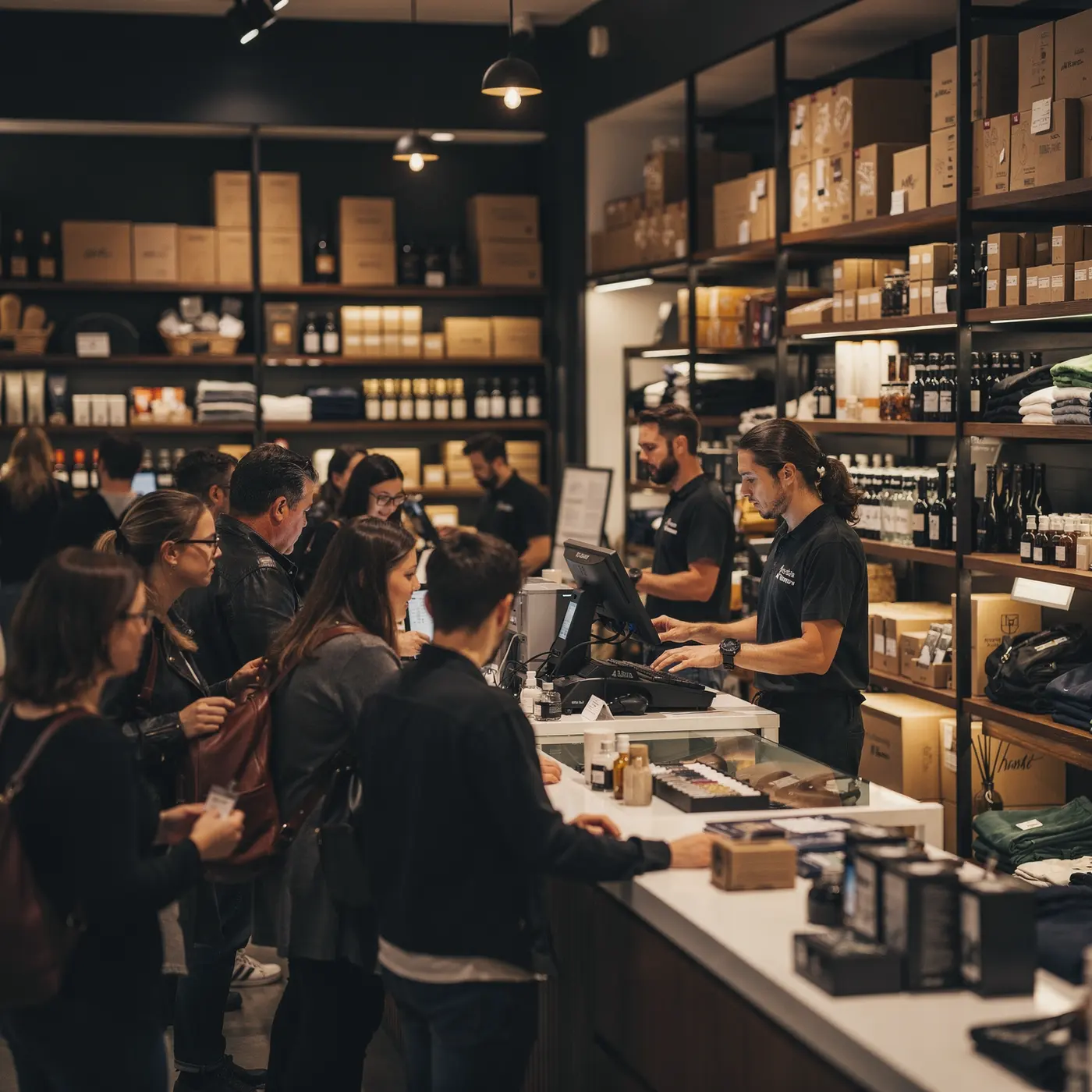
In short: under pressure, salespeople tend to turn into queue marshals: moving customers along quickly, dropping the add-on product, and average transaction falls precisely when the store is fullest. The answer is to measure selling quality under pressure — cross-reference footfall and dwell-time data against average transaction at the till, pay a special bonus for a high basket in peak hours, and show the team the gap in numbers. Data changes behaviour.
Under pressure, even your best salesperson can turn into a queue marshal — just trying to move each customer along quickly to reach the next one.
The problem is that precisely when there are the most customers in the store, the average transaction tends to fall.
The manager sees a busy till and smiles, without realising that on every sale they lost the second product or the accessory, because the salesperson had neither the energy nor the time to offer it.
The managerial problem
When you look only at turnover, you don't see what was missed in each basket.
Selling under pressure is thin selling.
If your till software shows that average transaction in peak hours is 20% lower than in quiet ones, that is a sign your team is giving up the extra sale in order to relieve the pressure.
You pay for it in eroded profitability.
The modern management answer
Modern management measures selling quality under pressure.
The aim is to hold a high average transaction even when the store is full.
The system lets you prove to the team that it is precisely in those hours — when every customer is already in their hands — that the small effort of an upsell matters most to their bonus.
Putting it into practice: growing the average basket
- Cross-reference the workload metric against transaction value
- The manual way — telling staff "don't forget to offer socks at the till" and hoping they do it while you are watching.
- The technological way — compare dwell time and footfall data against average transaction in the till software. If average transaction collapses in the hours when dwell time is short and footfall is high, your salespeople are processing the event rather than managing it.
- Incentivise a bigger basket at peak hours — set a special bonus for a high average transaction specifically in the busy hours the data identifies. That makes a salesperson understand that even with a queue, every second invested in offering a complementary product is worth money to them.
- Show the team the numbers — put the gap in front of them: "in quiet hours you sell 2.5 items per customer; when it's busy you drop to 1.2." Once they see the figures, they understand that they are working hard (moving lots of customers through) while earning little (not maximising the sale).
💡 Data is the strongest driver of behaviour change there is.